
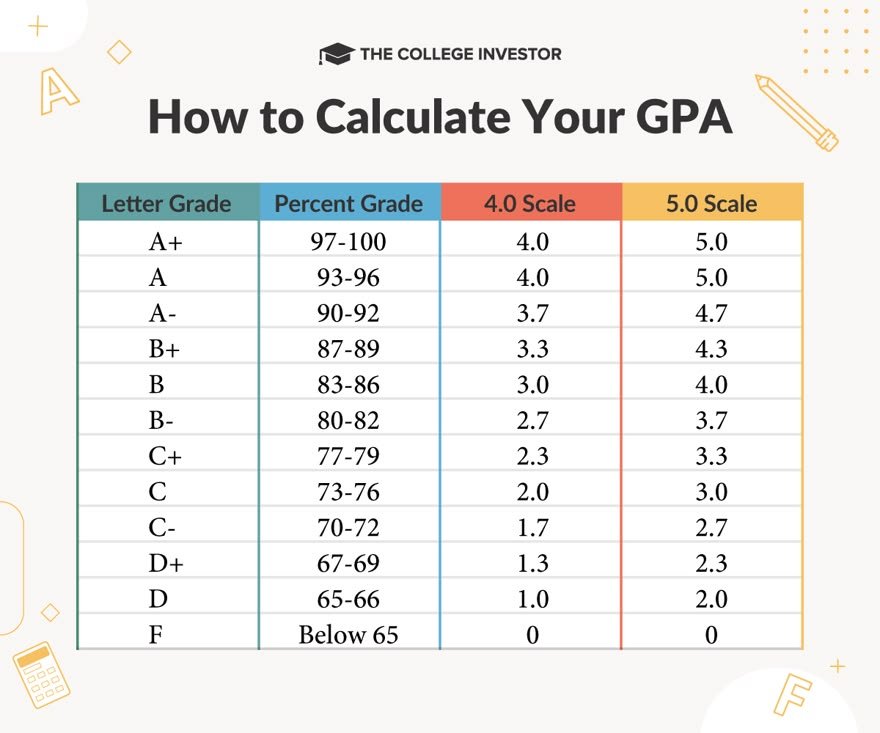
For students applying abroad, converting an Indian CGPA into an internationally understood percentage — or the reverse — is rarely a single, clean calculation. Unlike a single university applying one fixed formula, international conversion involves comparing entirely different grading philosophies: point-based systems, honours classifications, percentage-based systems, and relative grading curves that don’t map onto each other in a purely mathematical way. This guide breaks down how major international grading systems compare to Indian CGPA and percentage, the approximate formulas commonly used, why official credential evaluation often matters more than a self-calculated figure, and how to approach conversion depending on which country or institution you’re applying to.
Why International Conversion Is Different from Domestic Conversion
When converting CGPA to percentage within India, you’re usually working with two systems built on a shared foundation — both ultimately derived from the same underlying marks structure, just expressed differently. International conversion is a different challenge entirely. A US 4.0 GPA, a UK honours classification, an Australian 7-point GPA, and a European ECTS grade are not simply alternate expressions of the same scoring philosophy — they’re built on fundamentally different assumptions about how performance should be measured, ranked, and reported. This is exactly why no single formula can perfectly translate an Indian CGPA into every international system, and why approximate conversion methods exist alongside, not instead of, official credential evaluation services.
The United States: 4.0 GPA Scale
American undergraduate and graduate institutions almost universally grade on a 4.0 scale, where 4.0 typically represents a straight-A record and lower values represent progressively weaker performance. Indian students applying to US universities, or US-based evaluators reviewing an Indian transcript, commonly use an approximate mapping between CGPA and GPA.
Approximate Formula: Indian CGPA to US GPA
GPA ≈ (CGPA ÷ 10) × 4
Worked Example
- Start with your CGPA: 8.5
- Divide by 10: 8.5 ÷ 10 = 0.85
- Multiply by 4: 0.85 × 4
- Result: approximately 3.4 GPA
This formula is only an approximation. Many US credential evaluation services (such as WES or ECE) apply their own proprietary scale-matching methodology rather than a simple proportional formula, often factoring in the specific grading distribution of your home institution rather than assuming a uniform national standard.
The United Kingdom: Honours Classifications
UK universities typically don’t use a numeric GPA or CGPA at all for undergraduate degrees. Instead, they award classifications such as First Class Honours, Upper Second Class (2:1), Lower Second Class (2:2), and Third Class Honours. For postgraduate applications, Indian students often need to translate their CGPA or percentage into the classification band a UK admissions committee would recognize.
General Orientation for CGPA to UK Classification
- CGPA of 8.5–10 (or percentage above roughly 80%) — Often treated as broadly comparable to First Class Honours
- CGPA of 7.0–8.4 (or percentage of roughly 65–79%) — Often treated as broadly comparable to Upper Second Class (2:1)
- CGPA of 6.0–6.9 (or percentage of roughly 55–64%) — Often treated as broadly comparable to Lower Second Class (2:2)
- CGPA below 6.0 (or percentage below roughly 55%) — Often treated as broadly comparable to Third Class Honours
These bands vary between UK institutions, and many universities publish their own specific country-by-country equivalence tables for Indian applicants, so it’s always worth checking your target university’s published international entry requirements rather than relying solely on a general approximation.
Canada: Percentage-Based Admissions
Unlike the US and UK, Canadian universities generally work directly with percentage figures rather than a GPA or classification system, which makes the standard CGPA-to-percentage conversion especially relevant for Canadian applications. Most Canadian admissions offices ask for a percentage-equivalent transcript, calculated using the same formulas covered in our general CGPA to Percentage Calculator guide, most commonly:
Percentage = CGPA × 9.5 (or the specific formula used by your home institution)
Some Canadian universities additionally convert this percentage into their own internal GPA scale (often out of 4.0 or 4.3) for internal evaluation purposes, but the percentage figure itself remains the primary reference point requested from Indian applicants.
Australia: GPA Out of 7
A number of Australian universities use a GPA scale out of 7.0 rather than the more commonly known 4.0 scale used in the US. This adds an extra layer of conversion complexity for Indian students, since a direct proportional mapping from CGPA doesn’t automatically align with either the US or Australian systems.
Approximate Formula: Indian CGPA to Australian GPA (Out of 7)
GPA ≈ (CGPA ÷ 10) × 7
Worked Example
- Start with your CGPA: 8.0
- Divide by 10: 8.0 ÷ 10 = 0.8
- Multiply by 7: 0.8 × 7
- Result: approximately 5.6 GPA (out of 7)
As with the US conversion, this is an approximate proportional mapping rather than an officially standardized formula, and individual Australian universities often publish their own specific conversion guidance for Indian applicants.
The European Union: ECTS Grading Scale
The European Credit Transfer and Accumulation System (ECTS) uses a relative A-to-F letter grading approach, where a student’s grade reflects their standing compared to their cohort rather than a fixed numeric threshold. This relative grading philosophy makes direct numeric comparison with Indian CGPA particularly imprecise, since ECTS grades are, by design, not meant to be an absolute measure of performance the way a percentage or CGPA is.
For Indian students applying to European universities, most institutions request either an official percentage-equivalent transcript or route the application through a formal credential evaluation service, rather than expecting applicants to self-convert their CGPA into an ECTS-equivalent letter grade.
Why Official Credential Evaluation Often Matters More Than Self-Calculation
Across almost every country covered above, one theme repeats consistently: self-calculated conversions are useful for personal planning, but formal, legally binding applications — university admissions, visa documentation, immigration point calculations — frequently require an official credential evaluation report rather than a student’s own formula-based estimate.
Credential evaluation organizations, such as World Education Services (WES) in North America or similar bodies in other regions, review a student’s actual transcript, institution accreditation, and grading distribution before issuing an official equivalency report. These reports often carry more institutional weight than any self-calculated percentage or GPA, precisely because they account for nuances — like grade inflation patterns at a specific university — that a general-purpose formula cannot capture.
Step-by-Step: How to Approach International CGPA Conversion
- Identify exactly which country and institution you’re applying to, since conversion expectations differ significantly by region
- Check whether the receiving institution has published its own specific conversion guidance for Indian applicants — many larger universities do
- Use the standard CGPA to percentage formula (commonly CGPA × 9.5) as your starting point if a percentage figure is requested
- Use an approximate proportional formula if a GPA figure is specifically requested, adjusting the scale (4.0, 7.0, and so on) to match the target system
- Determine whether the application requires a formal credential evaluation report, particularly for visa, immigration, or highly competitive admissions purposes
- If a formal evaluation is required, submit your original transcripts to a recognized evaluation service well ahead of your application deadline, since these reports can take several weeks to process
Comparing All Major Systems at a Glance
- United States: 4.0 GPA scale, approximate proportional conversion from CGPA, often reviewed independently by a credential evaluator
- United Kingdom: Honours classifications (First, 2:1, 2:2, Third), CGPA and percentage mapped to broad performance bands rather than an exact number
- Canada: Predominantly percentage-based, using standard CGPA-to-percentage formulas directly, sometimes converted internally into a GPA out of 4.0 or 4.3
- Australia: GPA scale commonly out of 7.0, requiring a separate proportional conversion distinct from the American 4.0 system
- European Union: Relative ECTS letter grading (A to F), rarely mapped directly to CGPA without formal credential evaluation
Common Mistakes Students Make with International Conversion
- Assuming one universal formula applies across every country, rather than recognizing that each grading system has its own structure and conventions
- Using a US-style 4.0 proportional formula when applying to an Australian university that actually uses a 7.0 GPA scale
- Submitting a self-calculated percentage or GPA figure when the target institution specifically requires an official credential evaluation report
- Overlooking country-specific or university-specific conversion guidance that’s often published directly on the institution’s international admissions page
- Treating an approximate conversion as a guaranteed equivalence rather than a general planning estimate
Tips for International Applicants
- Start researching your target institution’s specific conversion expectations early, since requirements vary widely even between universities in the same country
- Keep both your original CGPA and any converted percentage or GPA figure ready, since different parts of an application process may request either format
- Budget extra time for formal credential evaluation if your target institution or visa process requires one, since these reports are not instant
- Use approximate conversion formulas for your own planning and shortlisting process, but rely on official evaluation for the actual submitted application
- Reach out directly to the international admissions office if published conversion guidance isn’t available, rather than guessing which formula to apply
Frequently Asked Questions
Is there a single official formula for converting Indian CGPA to a US GPA?
No single formula is universally recognized across every US institution. The proportional CGPA ÷ 10 × 4 approach is a commonly used estimate, but many universities and credential evaluators apply their own specific methodology instead.
Do UK universities accept a self-calculated classification equivalence?
Some do for initial application screening, but many UK universities publish their own official country-specific equivalence tables for Indian applicants, which should be treated as more authoritative than a general self-calculated estimate.
Why does Australia use a GPA out of 7 instead of 4?
This reflects a historical grading convention adopted by many Australian universities, distinct from the American academic tradition. It isn’t better or worse, simply a different underlying scale that requires its own separate conversion approach.
Is a credential evaluation report always required for international applications?
Not always, but it’s commonly required for visa applications, immigration points calculations, and admission to certain competitive programs. Always check your specific institution’s or immigration authority’s stated requirements before assuming a self-calculated figure will be sufficient.
Can I use my CGPA directly without converting it for an international application?
In some cases, yes — many postgraduate admissions committees are familiar enough with Indian CGPA to interpret it without conversion, particularly if your original transcript is submitted alongside it. However, always follow the specific format requested by the institution’s application portal.
Final Thoughts
International CGPA conversion isn’t a single formula problem — it’s a landscape of different grading philosophies, each requiring its own approach depending on the country and institution you’re applying to. While approximate proportional formulas are useful for personal planning and shortlisting universities, formal applications involving visas, immigration, or highly competitive admissions almost always benefit from an official credential evaluation report rather than a self-calculated figure. Use the general comparisons and formulas in this guide as your starting point, but always confirm your target institution’s specific published conversion guidance before finalizing any application.